Tuesday, April 23, 2013

Homophobia and Racism

In Enke's Finding the Movement it is evident that racism isn't the only oppressive force bearing down upon the black minorities in the U.S during the 1960s. Lesbian groups are discriminated against brutally, with children being alienated by other children, whose parents refuse to let their children hang out with homosexuals, fearing that their children will adopt homosexual tendencies.


The unique aspect of this particular feminist movement is the fact that these black women tried to take control of a public domain: a softball field. While this may not seem like a huge deal in a logical sense, one must think about the implications behind this tactic. These sports fields have been established by society as "men only" baseball fields. The idea of women trying to force their way into these fields shocked and confused a large number of white middle-class citizens, as well as these black women's fellow lower class citizens. Even black citizens thought that this was wrong at first, but eventually they warmed up to the courage of these young women and their athletic ability, so this softball team gained a large group of fans in Detroit(at the same time making quite a few enemies). The reason the public domain makes them unique is because before this, women had private spaces to reside, and society could safely leave them to their own devices, basically forgetting about this small minority. However, if these women are controlling public domains, they cannot be easily ignored. This high-risk/ high reward tactic can cause many outrages and internal conflict, but it also raises awareness to the public about the problems these lesbians/feminists face.

However, this turn of events also revealed more homophobic tendencies, this time in the softball team's coach! He refused to let them style their hair a certain way that was interpreted as being a lesbian style, the coach also separated the younger girls from the older girls, fearing that the older girls would influence the younger girls with the idea of being a lesbian. These irrational fears caused various internal conflicts in the team, and some of these girls rebelled against these rules. If they found out a certain element made them seem like a lesbian, they would intentionally reinforce and perform this element to drive their sexual identity home into the minds of others. They cared not for the consequences, they felt their very identities were being challenged so they lashed out at the offenders. In conclusion, these brave young women challenged their oppressors by taking advantage of their paranoid, homophobic(as well as sexist) ideas, and using them against them. This helped the lesbian feminist movement greatly as it rose awareness and helped give courage to oppressed women that had little hope to cling to

Passing

One of the first concepts I learned about in college was passing. At first it was in terms of African American Literature, and how certain characters would "pass" for white in order to avoid conflict or simply go through daily life. As time moved forward I also learned about it in terms of every day life - how people around me could be passing for white, black, straight, male, female, etc. While reading Anne Enke's Finding the Movement: Sexuality, Contested Space, and Feminist Activism I was moved (however, not surprised) by the stories told of women who pass in order to live their lives. I was particularly struck by the story of Kathleen Thompson who was told by women at the University of Chicago that she was "too southern, too feminine, too much 'like Dolly Parton' to be welcomed at a northern feminist party where all of those things coded uneducated and unenlightened" (252). Throughout reading the book I made comparisons to my experiences in life, but had a strong connection to Kathleen. I attended a non-denominational, private, all girls' high school in Pittsburgh, and because of this fact I have been constantly labeled as both feminist and lesbian. The reason I thought of myself whenever I read about Kathleen was because of how easy it is to label somebody just based off of where they are from and their appearances. Because I wore a kilt to school, had predominantly female friends, and no boyfriend to speak of I had to be a lesbian. And not only did I have to be a lesbian, but I had to be a feminist because that's what they teach you to be at an all girls' school. At least, in their defense, people have assumed one thing correctly: I am a feminist. The problem that I ran into the most, however, was this: I am not a lesbian, but when I would deny this fact to people who used the term as a negative insult I was strengthening their argument that it was something bad. Faced with the challenge of either defending my sexuality and rewarding the person who challenged it with positive reinforcement of their insult I frequently chose to roll with the verbal punches and let it go. In my case I "passed" as lesbian in order to not support a negative connotation.

I think that the book made me think about my experience because it also centered entirely on space. Because I participated in all female education, an all female space all of my interests must have been focused on females. Obviously I have not contributed to the feminist movement in the same ways as Kathleen and the numerous women talked about in Enke's book, but I thought that my experience was an interesting parallel, and since I did not get to share most of it in class, I figured this final blog post was a good space.

Monday, April 22, 2013

Women's Spaces as a Company?

When we were reading Finding the Movement the examples of safe, open, progressive, spaces for women were somewhat privatized (in terms of a contained space). It was grassroots. The women who ran the bookstores and the coffee shops were interested in feminist language and shared experiences. They were local and home grown. It made me wonder if the same ideals and desires could be placed into larger businesses or corporations. It seemed from the class discussions that the answer would be no.  But I was still curious.

Take for example a bookstore. If a woman who wanted to publish a story sent it to an editor who was operating with the same desire to print materials for women to help create a sense of community. Then it was published by a company who solely printed these types of material. And finally it entered into a store like the Amazon Bookstore. Does a type of "horizontal integration" work for this?

This brings into question the idea of spaces for women. Does it have to be a physical space or can it be an intellectual space and do they even hold the same meaning?

I don't really have the answers to any of this. Maybe it isn't even feasibly possible. Just something to think about from our last reading.

Women creating their own spaces.

I was very intrigued when reading Finding the Movement by Anne Enke to discover that there were women working to either claim current spaces or make spaces of their own. It made me aware of an issue within the LGBTQ community that I've never noticed before. Even though our society still doesn't fully accept homosexuality, it still caters towards the males. When going into a big city, it is easy to find where the "gay district" is, and when going there you can find many clubs and bars usually tailored towards gay man, but not many towards women. I found interesting how at the time, there were many gay bars and none for women and that it even became a legal struggle for women a space they could call their own. Another issue that caught my eye was the fact that race also came into play within these clubs and sexist, and that these issues came from the LGBT community. Gay men would not allow women into their bars and at times the whites and blacks would be separate. I find it intriguing how even in a non-heteronormative setting, white males still had privilege over others.

Women combated not having their own space through the "creation of quasi-commercial alternatives such as dollar parties and warehouse parties" (Enke 28). They even began to own bars of their own and become visible to the public. Dollar parties and warehouse parties were hosted and attended mainly by black women seeing as they "used dollar parties...to build an alternative economy and elaborate a visible, black, queer community" (Enke 29). Gender restrictions placed on bars "pushed white women to illegal occupy warehouses for gender liberating gatherings" (Enke 29). Having their own spaces allowed these women to freely discuss other venues that would cater to their needs and wants. Also, by having their own space they could dance with each other and not have to worry about being kicked out. This allowed them to be free within a safe, confined space and allowed them to express their gender and sexuality in any way they desired. These venues later progressed into other things such as apartments that further provided space for lesbian women or expanded in their mission. For example, dollar parties started as a place for lesbian women to gather and socialize and later "Dollar parties provided food, drink, and shelter for large numbers of people" (Enke 35). Ultimately, the progression of women having their own space transformed into having spaces for feminist or lesbian feminist such as coffeehouses, bookstores, and clubs. It paved the way for women of either straight or lesbian to have their own space where they could gather and socialize their ideals and any other information they found significant.

Wednesday, April 10, 2013

The United States Threat to Peace


Alexander Tecumseh Duffy
Professor Shaw
20th Century Political Movements
April 5th, 2013
 The United States Threat to Peace
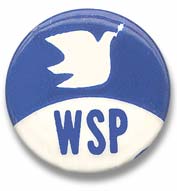
            Throughout the history of American the United States government has made significant efforts to hinder, slander, and in any way they can ruin women’s peace movements.  The reasons behind their attempts, which have varying levels of success, is the fear that they experience from the movements calls for peace.  The peace movements are in direct opposition of the colonial and militaristic nature of the post World War Two United States.  However, this Blog will not focus on the nature of the United States government.  Instead, it is intended to highlight the issues that the Women Strike for Peace movement, and its predecessors, addressed that caused friction between them and the United States government.
            The original women’s peace movment mentioned in Amy Swerdlows Women Strike for Peace stemmed from the 1836 request sent out by William Ladd, founder of the American Peace Society, to mothers urging them to push for the vote.  Ladd’s reasoning was that the responsibility of women to place their values in with those of the men running the country.  While Swerdlow makes no mention as to how Ladd’s call to arms affected women’s suffrage, or the United States government’s response, we know from the initial book of the semester, Southern Horrors, what the general feelings were.  Among Southern men, the fear was that since black men were already given the right to vote, having women’s suffrage would only intensify their fear of black equality.
            This small movement was a predecessor to the outbreak of movements such as the National Committee on the Cause and Cure of War in Interwar America.  Since the end of bloody slaughter called WW1, peace groups were sprouting up all across the nation.  The military wanted to put a stop to these groups in order to maintain the hold that they had over the nation and to stop the women from raising children who were unlikely to fight, not matter how isolationist the United States claimed to be.  The slander used in this case was a spider chart created by the head of the Chemical Warfare Service: General Amos A. Fries.  This chart warned citizens of the supposed links that women’s peace groups had to Communism and how they were attempting to subvert the power of the United States and capitalism. 
            After the nation was forced to witness the destruction and horror of World War 2, the peace groups that had barely survived the gung-ho attitude of Americans during the war began to flourish in the post-war years.  Movements like Women Strike for Peace that sprang up out of the fears of nuclear annihilation during the Cold War, and the path that the United States had taken towards giving into the military-industrial complex stood in opposition to one another.  The United States government would not stand for anyone to combat their efforts of building up a massive nuclear arsenal, and so the response their was to subject peace groups to the HUAC.  The McCarthy era witch hunt known as the Red Scare cast its gaze towards many peace groups, and attempted to label them communist as a way of discrediting them. 
            The book, Women Strike for Peace, informed us as to how the HUACs attempt at slander played out with the well-played reversal by WSP.  However, even though the HUACs plan was foiled, why precisely would they want to stop the WSPers?  Just as President Dwight D. Eisenhower warned in his Farewell Address, “we must guard against the acquisition of unwarranted influenced, whether sought or unsought, by the military-industrial complex.” (D. Eisenhower “Farewell Address”)  Eisenhower’s warning came all too true for the WSP movement.  Since they wanted to put an end to above ground nuclear testing due to the signs that the dangerous isotope Strontium 90 was getting into humans in higher doses.  While there was proof for the WSPs fears from a study called the Baby Tooth Survey which found that children born in 1963 had 50 times higher levels of Strontium 90 in their teeth and those born in the 1950’s.  The military, well aware of the ill affects of their testing were at the peak of the arms race with the Soviet Union, and in their eyes could not afford to give up the tests that were being conducted in order to further research as well as flex their nuclear muscle. 
            While the battle between the military and the WSP for nuclear testing ended in 1963 with President Kennedy’s signing the Partial Nuclear Test Ban Treaty the war had just begun.  Throughout the rest of the century, the WSP and military would continue to butt heads, and while it would never reach as near a point to shutting down the WSP under the guise of communism the women and planet still do not have the peace we need. 

Powerful/Pushover: Femininity and roles in WSP and anti-draft housewives

It is an essential theme to the story of Women Strike for Peace that women embraced the role of motherhood. In order to be affective activists, they drew upon the position of mothers as wardens of the family to oppose health issues from nuclear warfare for the sake of their children, and opposed the draft for the sake of their sons and husbands. While reaffirming their status as wives and mothers, women also embraced their femininity and class status to reap the benefits of being treated as delicate, proper females.

One such example is in the women’s anti-draft activity. In chapter eight, Swerdlow describes women sitting in offices of men they had counseled because they were well aware that their presence as “respectable mothers” would help their cause. The idea of “respectability” at the time presumably connotes white upper/middle class housewifery to the exclusion of non-white women. In this, WSP enacted a relatively reformist movement that allowed them to take advantage of stereotypes and status quo ideas about womanhood.

For example, outside the white house in 1964, women were confronted by police relatively non-violently while the two men:
“…who had spoken at the rally and who had joined the women in the march were treated much more severely than were the WSP women. They were dragged on the pavement, beaten, and arrested. This only confirmed the women in their belief that middle-aged, middle-class mothers could get away with more militancy than young men and that WSP had to do even more to aid the resistance” (179).
In such circumstances, women benefitted from the oppressive view of women as fragile and passive, and were able to use it to their advantage in making a highly public scene. In the media criticism that followed this event, the national mainstream perception of the WSP’s behavior becomes clear. Newspapers wagged their fingers at women received for being too brash and not obedient enough to police demands. Swerdlow explains that “the unladylike confrontation with the police at the White House contradicted the image WSP had nurtured carefully for close to six years” (180). Their important and sought after image of mainstream, respectable, feminine housewives resonated with the country.

Despite Swerdlow’s summary of the reaction to their actions, It is not entirely clear within her text how consciously or not women preferred relatively reformist behavior. Such behavior is apparent in their emphasis on opposing war-mongering decisions made by men in government without opposing the power structure that encourages such violent and imperialistic activity. If they are not aware, I am not attempting to downplay the importance and value of their activism simply because it does not fit within modern objectives of progressive Western feminism.  In addition, their outspoken and persistent behavior certainly was not “ladylike,” but their concern over their image reflects their understanding that maintain feminine symbolism would help them. In addition, in her conclusion, Swerdlow addresses that the WSP, “…carried with it the heavy baggage of the political repression, , cultural conformity, and antifeminism that marked the Cold War consensus of the 1950s” (233). Acting within the means of their timeframe, women exhibited leanings toward radicalism in their non-exclusionary, local, non-hierarchical, female-dominated structure. Radicalism in terms of breaking free of assigned gender roles (or at least having the option) did not exist because they were unwilling, uninspired unaware or unable to incorporate it into effective activism tactics.
           
I am not attempting to scorn women who chose not to give up their roles as housewives or break from the bonds of femininity and class status required for societal respect, but I am attempting to understand the potential consequences (positive or negative) of doing so. Many may attest that without their upholding of many traditional values, they would not have garnered any support from mainstream women, the media, or been able to avoid more serious political and congressional reprimand (e.g: anti-draft DC protest, HUAC hearings, etc.). This was essential to their success, but a potential negative consequence that I see in their home lives is the inability of some women to have a choice in their role at home. It serves an example of female oppression, but also as an interesting manifestation of the very values that inspired women to join WSP.

Women were encouraged by traditional societal norms and persuasions to act as good, reliable and happy (and perhaps dainty) housewives, which empowered their role as a warden or protector of a household. This reinforces stereotypes about gender roles, and that women are seen as naturally inclined to protect nature, children and the Earth. However, the socially accepted role of mother that includes this idea gave them the to be seen as exemplary women making decisions for their family’s well being. The role of protector, however, also illustrates how women put immense energy into anti-draft activity that was all focused on the well being of men and not necessarily themselves. Even in this service of men, women still received resistance at home.

Much like the experiences of women in Common Sense and a Little Fire, expectations from the family can be a source of stress and tension for active women. Swerdlow describes many husbands as supportive of the cause and of their wives as political “surrogates,” especially because they felt less capable of accessing their political voice for fear of their jobs (185). Even these men, the ones allied with female activism, voiced concerns and distress over not having dinner ready, steady companionship, and an upkept home. Ultimately, Swerdlow says, men and families were anxious for the activism to end. Women had to devote energy to their WSP cause, caring for their families, and dealing emotionally with resistance from home.

Though Swerdow contends that lack of support from families did not curtail her own involvement or that of other prominent figures, the resistance still shows that women were still not acting within their intended roles.

In her conclusion of the chapter, Swerdlow resolves that when women are involved with and leading a struggle-ridden movement, they begin to understand their lack of personal and political power and begin to question it. In this, the lack of awareness or concern that women feel over their assigned role and place in society will only appear as a pressing issue once traditional courses of action have created obstacles.

The WSP women bore the burdens of accomplishing great tasks while never rejecting their role of housewives. By embracing the role, they garnered support from less-politically inclined women that may otherwise have not experienced the empowering struggle of power-relations and role-frustration. Whether intentional or not, the use of mainstream motherhood and the lack of rejection of traditional roles and femininity may have ultimately lead more women to join the cause of their own rights, and potentially promote further action. 

Tuesday, April 9, 2013

Motherhood OR Feminism? Dissolving Boundaries for Peace


Recently, an article in the liberal/feminist themed 'zine Jezebel surfaced on their website, indicating the fundamental difference between the statuses of feminist and housewife in response to an article in New York Magazine. In this story, two women who professed formerly satisfying personal careers in activism and social work are articulated as liberated in their choice to be stay-at-home moms. While many mothers choose to put their jobs on hold in order to rear children, the article flat out fibs that this choice is a trend for young American women. In fact, the more trending family adjustment is for men to take on the role of domestic manager and to become house husbands.

What's troublesome about the original article is that it touts postfeminist rhetoric and the liberation of the modern woman as being fulfilled within the domestic space. Now that women can have careers, they can also actively choose domestic life. What's troublesome about the Jezebel piece is that it scoffs at the very notion of the blending of feminist identity and housewifery, therefore alienating both housewives and feminist housewives from more mainstream liberal feminist rhetoric. The false dichotomy of feminism and homemakers as opposing creates regression for feminism, ignoring the role of the housewife as head of labor production from socialist and industrial or working class feminist perspectives. Intersectionally, this separation causes the erasure of many women's experiences.

In Amy Swerdlow's Women Strike for Peace, it is that precise blending of feminism (through the onset of radical individualism, not liberal feminism) and traditionally feminine roles of housewives and mothers that made the WSP movement as widespread and successful as it was. Like Clara Lemlich in Common Sense, the radicalization over time of motherhood and the appeal of the peace movement to mothers nationwide lead to a powerful resistance movement that included boycotts, successful evading of the Red Hunt/House Un-American Activities Committee (HUAC), and deliberate rejection of female assimilationist (liberal) feminism. The WSP movement was based in deliberately feminine tactics as a protest to the brand of masculinized war-mongering capitalist patriotism that young American boys were raised on at the time.

The direct challenge WSP placed towards liberal feminism, the most recognized form at the time of patriarchal resistance, was to value more highly traditional femininity. In seeking equality with men, second-wave feminism alienated housewives by allowing internalized misogyny to proclaim that housewifery isn't enough for women to be fulfilled and so therefore is valueless. The reaction of WSP was to form a distinct discursive "women's culture" movement, operated in a non-hierarchal grassroots manner and geared towards a less radical, more common purpose of peace. Inciting and revaluing their roles as mothers, creators of life, and rearers of the future, women like Dagmar Wilson and Gerda Lerner, as stated here, created networks in which "the ground upon which women stand in their resistance to patriarchy and their assertion of their own creativity in shaping society, in other words, the ways in which women, as a group, have historically re-defined and recast male-imposed roles and tasks on their own terms and from their own vantage point"(234).

This reclaiming of feminine space and asserting its crucial importance, not just to peace, but to child-rearing and the betterment of society overall, was coded more subtly in the beginnings of the movement. It became clear, however, after the WSP's evasion of HUAC condemnations (116, 117), that their specific brand of radical individualism and the empowered feminist housewife spoke volumes in public spaces. The WSP movement rejects the binary that the Jezebel and New York mag places before us today, and we must remember the critical importance of housewifery in feminist discourse and calls to action. Housewives aren't liberated by anything other than the agency afforded by personal choice. The reason the WSP movement was so widespread, so appealing to so many, was that rather than invalidate the middle class white housewife the way the Feminine Mystique did, the movement revalued the role of the housewife and mother as stewards of culture and the nation's well-being.

Swerdlow addresses these tensions, as well as the effectiveness of "self-marginalizing" (234) feminized political tactics. The successful appropriation of femininity into the WSPers' personal politics is what she sites as the source of the movement's original success. Combined with the economic mobility afforded to them by their class status, the WSP ladies were able to combine direct action with indirect, using petitions to their congressmen and eventually Lobby by Proxy to demand disarmament (85) but also my staging a proactive, "feminized" educational campaign that involved a wildly successful boycott of milk (80). These combined with many more acts, revolutionized the role mothers played in political and public spheres and led to many reforms by congress in education and the prolonging of war.

So yes, I believe it's possible, if not just plain common sense, to be a feminist housewife. The WSP activists realized this and harnessed the power of the housewife as the head of child-rearing and familial consumption. By empowering women through their originally male-assigned roles, the WSP ladies reached new heights and made revolutionary strides towards a more feminine inclusive public American culture. 

Women Strike for Peace

In her conclusion  of Women Strike for Peace, Amy Swerdlow summarizes five important points about the WSP movement. Firstly, she reiterates that the WSP movement was important for women's history, and should not be marginalized as a "lost history", and that it was important for the collective human history as well, due to WSP's "ability to break through the Cold War consensus that had silenced foreign policy dissent int he United States for over a decade" (Swerdlow 234), as well as the WSP's opposition of atomic testing and assertion that "there was no such thing as a safe dose of strontium 90 or iodine 131 at a time when the dangers of atomic radiation were hidden from the public" (Swerdlow 234).  Swerdlow further asserts that the WSP's use of the maternalist standpoint, rather than reinforcing female marginality through building on traditional female culture, actually allows the role of that traditional culture to become subversive against the archetypes that reinforce it.  She points out that it was precisely the tactful use of this subverted maternal rhetoric that allowed WSP to be so effective against the dominant warmongering narrative: "WSP's standpoint, its challenge to male militarism, was based on the conviction that the preservation of life on earth is of greater value to the human race than the promotion and defense of abstract and outmoded notions of national advantage....In stressing maternal outrage at the threat to the health and welfare of their children, the WSPers were not only expressing their own sense of male betrayal...they were also trying to speak to the American people in a language that they believed would be understood and accepted" (Swerdlow 235).

The second point that Swerdlow highlights in her conclusion is that there is a difference between feminist theory, and actually being on the ground crafting a movememt for change.  The feminist movement largely criticized WSP for not being radical enough, for not rejecting the "housewife" identity, and for daring to retain that identity while still claiming to be feminists.  Swerdlow and other WSPers rejected these criticisms with the proof that WSP did in fact make huge strides for the feminist movement not only in America but Internationally.  In chapter 9, Swerdlow proves that WSP and later WISP was able to build effective and productive ties with women in Great Brittan, Germany, the Netherlands, Japan, Burma, Australia, Canada, and France, among other countries. In 1961, a WISP delegation successfully spoke in front of the UN, and in 1962 they held a peace strike in Washington DC that was directly acknowledged by President John Kennedy "I saw the ladies myself. I recognized why they were here. There were a great number of them, it was in the rain. I understand what they were attempting to say. Therefore I consider their message received" (Swerdlow 193).  This all proves to me that the WSP movement was successful in reclaiming a public space for women's vioces in the public sphere, even though these voices were still coming from inside the home. I feel like the opposing argument can be most eloquently illustrated by the song Gonna Be an Engineer*.  This song beautifully illustrates the prevailing attitude towards housewiffery as a place of inescapable second-class status.  While this was true for many women, the members of WSP denied this sentence of impotency and turned the housewife image into a base for their activism.  This is perhaps one of the more brilliant moves of culture jamming that I have seen thus far, and this would lead me to argue that the WSP movement was even more effective in liberating women's voices than the traditional feminist movements of the time. This correlates with the 5th point that Swerdlow made in her conclusion: that the WSP gave dignity to housewives.  The movement let housewives vocalize, on a national scale, that what they were doing was valuable work even though they weren't being paid for it.  In a way, it is the MOST valuable job: they, as women, had to "sacrifice their own personal interests and career goals in favor of raising the next generation" (Swerdlow 235).

Swerdlow's third and fourth points were that the WSP movement was influenced by radical feminism, and that they were a separatist organization.  Neither of these characteristics are something one would expect from a group of white, middle-class housewives.  Nevertheless, it is apparent in chapter 9 when the Clarke and Gordon visit Vietnam that this experience and the images and stories they (and others) brought back channeled the WSP movement towards more radical action than they had taken before. WSP became the "first American peace group to establish person-to-person relations with the Vietnamese" (Swerdlow 217).  When Ngo Ba Than, "lawyer and former non-Communist leader of the opposition forces in Saigon" and personal friend of promonent WSPers, was arrested, WSP protested through picketing in front of the South Vietnamese Embassy in New York.  Daring to picket, and for international affairs no less, was a new step towards militancy for the WSP.  While in Hannoi, Dagmer Wilson formed such a compassion for the Vietnamese that when she saw American bombers flying overhead, she stated at a public rally, "I wanted to take up a gun and shoot back. I never thought I'd want to do that in my life...All one's feelings of national unity go out the window....You have no idea who the enemy is - the enemy is war and violence" (Swerdlow 218).  Their experiences in Vietnam lead the WSPers to a new impassioned mindset that lead them to embrace radical feminist techniques.

In relation to the tone of the book as a whole, or the way in which it was written, I was personally not thrown off by the way Swerdlow dealt with the dichotomy of being both a participant and trying to write an accurate history of the movement.  While there were a few jarring moments in which she changed from first person thought to third person referencing in a matter of sentences, my initial displeasure with this occurrence was replaced by an appreciation for the likelihood that she may have been writing that on purpose.  The line of participant and historian is likely a hard one to walk, and Swerdlow acknowledged this in her introduction. Perhaps there  I believe there should be an appreciation in academia for books of this nature: after all, in studying history,is it not the firsthand accounts and primary sources that are most valuable? And what are these but memories?  Because peer-reviewed literature is based on these sources, it effectively boils down to the author deciding what voices to admit into the narrative.  Who better to decide this than someone who lived it?  Who better to create the cannon of academia, which is by its nature exclusive of voices it deems "unhelpful" or "unreliable", than someone who can best know the important voices through personal acquaintance?  If all histories were written by their participants, rather than those who were able to assert dominance in the end, our collective stories would all be told differently.

*I became acquainted with this song through participating in 2013: A Women's Suffrage Pageant, created by Kevin Van Develde and the Cast members, as his senior comprehensive project. Please come watch it on Friday, April 12th at 4pm in the Vukovitch court yard!

Modern Mothers for Peace


Immediately following September 11, 2001, the majority of Americans supported the Iraq War. However, as time went on and it appeared as though nothing was being accomplished people began to be more active in their anti-war sentiments. One woman, Cindy Sheehan, was extremely vocal about her anti-war feelings after her son died during battle in Iraq in 2004. She joined other parents of deceased soldiers to speak with President Bush and bring an end to the war in 2004. However, she is most widely known for her protest outside of President Bush’s private Prairie Chapel Ranch in Texas. Her purpose for being at the ranch was to get answers from president regarding the war and why her son lost his life. She has been quoted saying:

I'm gonna say, 'And you tell me, what the noble cause is that my son died for.' And if he even starts to say freedom and democracy, I'm gonna say, 'Bullshit. You tell me the truth. You tell me that my son died for oil. You tell me that my son died to make your friends rich.... You tell me that, you don't tell me my son died for freedom and democracy.'

Although she was not granted her meeting with President Bush Sheehan went on to join movements such as the Bring Them Home Tour – a traveling antiwar protest that traveled the country in groups and met in Washington DC to end in protest. Sheehan was also named the “Peace Mom” by media, and enjoyed popularity in European countries. A play entitled Peace Mom was written about Cindy Sheehan and she attended its London premiere. Cindy was also named as Roseanne Barr’s running mate for the Peace and Freedom Party in the 2012 presidential election. Additionally, she has written two books: Dear President Bush and Peace Mom and maintains her own website

I chose to talk about Cindy because she both reminded me of the women in Women Strike for Peace (by Amy Swerdlow), and highlighted major differences. The first difference is the fact that she had very little problem with the war before her son’s death while the women of the 1960s main concern was to protect their children. Not only was the WSP trying to keep their sons out of war by ending the draft, but they were also trying to protect their children from items contaminated by radiation, such as milk. Although Cindy says that she thought there was little reason to go to war in Iraq, she did not speak out against the war until after her son died in battle.

However, like her peace seeking counterparts of the 1960s she garnered mass amounts of media attention and assured that her thoughts were being heard. For example, when numerous women were called into a hearing in front of the Committee for Un-American Activities, the WSP rallied themselves into a media seeking frenzy and attracted enough media attention that many news outlets were covering the story before the committee could even publicly announce the hearings. This worked in the women’s favor because they then had public support because it was their story being told rather than that of the Committees. Cindy Sheehan was also able to gather support from members of congress, celebrities, and civil rights activists to publicize her antiwar movement in the early 2000s.  

This comparison between the WSPers and Cindy Sheehan made me really think about the reactionary world we live in. Of course there were people who were against the war from its very beginning in 2001, however, many people were happy that we were fighting back against the terrorists who threatened our country. However, once people began to realize what we were sacrificing in terms of money, time, and human lives the attitude began to change. When people were personally affected by the war they wanted change to be made. And now, when things in our world are (for the most part) calm, most people would claim to be antiwar and pro-peace. Obviously there are always going to be moments in time that spark huge changes, but I think the proactive nature of the women in the 1960’s is something to be looked at again and considered in the future, rather than the more reactionary mentality we have today. 

WSP, it's Success, and today


Most women's movements revolved around women's issues and rights, and these movements tended to shy away from political issues unless these movements focus solely on women. The "Women Strike for Peace" movement, or WSP, consisted of women with enough courage to take women's movements to the next level, and target larger, more global political issues. These women challenged issues that "ordinary housewives" wouldn't DARE touch! They touched upon important issues such as the nuclear arms race, military spending, and proper benefits for our troops. Why was the WSP ultimately successful? And would their tactics be applicable to today's society? Or would they flop under the weight of our government's new and improved policy towards social movements and strikes?


  In the book "Women Strike for Peace" by Amy Swerdlow, the most shocking element of the WSP is made clearer:  they were entirely structure-less. There was no centralized state where they resided, nor was their an appointed leader to pin the movement on. While this seems absolutely absurd at first glance, there is actually various benefits that were pulled from this new approach to women's movements.  Firstly, the media LOVES to use scapegoats, and dig up dirt on them to create controversy. The WSP had no true leader to use as a scapegoat, so in order for people to dig up dirt on the WSP, they had to assume and generalize, which is a much less efficient tactic. The only "leadership" per-say was the women that helped fund the WSP's events and advertisements. This rebellious idea of no central leadership could be derived from their view that so-called "experts" in society are the same people that brought our country to the brink of disaster, so their advice could not be trusted. Hence they had to challenge the very system society had built. While the WSP had many problems arise from their unorganized group having a lack of effective communication, it still proved successful via the element of surprise. This was a tactic that was never truly used before by a social movement, as practically every one before it had some sort of leadership. The WSP took advantage of this and proved to become a very successful movement.  Amy Swerdlow writes that women of many different political backgrounds were a necessity: “The organization of the antitesting campaign used the talents of women of many different political perspectives. Some were interested only in pure milk for their children, others saw a test ban treaty as a way of lessening Cold War tensions, and still others saw it as a step in the long journey toward total disarmament and world government” (Swerlow pg81).  These women of varying perspectives banded together because while they have different views and goals in mind, they realized that these goals could not be achieved alone, and that the WSP may just be the rising organization they need to make a difference.

Another reason that having no centralized leadership gave them an advantage is that women of many different perspectives and political perspectives began to slowly join their ranks, making the WSP a more broad-minded group, open to more and more ideas, then looking through these ideas and picking out the best looking one. The diversity of the group made it less intimidating to others, making them more inclined to join the WSP. It’s odd how the refusal to appoint a leader benefitted them so much, considering how illogical it all sounds on paper.

WSP was so successful due to how broad-minded it was. It gave power to the individual, the "ordinary housewife", to fight back against warmongers and nuclear testing, as well as other political issues. The group mentality gave these women the courage to face many difficult times, but they remained steadfast. The vast majority of it's members were very proud to be a part of it, which is clear to me during the WSP's anti-HUAC statement: "Approximately one hundred women volunteered to testify before HUAC and were refused. Carl Urner of Portland, Oregon, spoke for many of those who  volunteered. She made it clear that she would not 'name names.' 'I think each woman should be--and probably is--proud of her own participation'"(Swerdlow pg105).


Unfortunately, in today's society the tactics of the WSP would prove largely unsuccessful. The element of surprise, for one, is now gone. As the saying goes: Fool me once, shame on you, fool me twice, shame on me. The government's control of social media and media attention in general makes it more difficult for social movements to thrive. For example, the Occupy Wallstreet movement that was quite popular when it first began, but as soon as the media caught notice of it, they began looking for a leader to use as a representative for the movement. When they realized the movement had no leader, they became rather uninterested in the movement and Occupy Wallstreet (Link here: http://occupywallst.org/ ) received a lot less attention from the media. The government of today is much more capable of ignoring movements, since people are now more expendable, since there is almost always somebody unemployed or poor that is ready to take their job, or position. Why should they care about the state of the economy or social issues when their pockets are overflowing with profits and paycheck bonuses? So it begs the question: what new tactics must we bring to the "table" of political issues, in order to bring about necessary change to achieve peace in our country? No, we should set our goals higher, we must achieve peace in our world!


Blog Post 2:
Women Strike for Peace

The women of WSP we’re able to mobilize a movement and gain such a great momentum that they were able to go before the HUAC, a name that was feared by many Americans in the 1950’s and 60’s. The WSP set out with a message of disarmament as well as transparency and inclusiveness from the US government.  On Page 127 of the book, it states that “in 1964 WSP focused its protest –lobbying, demonstrating, and letter writing –on a fallout shelter bill the Kennedy administration was pushing and later deferred.” However, as the political climate began to change in the states the concerns of the women changed. One of the most interesting things that I found in chapter 6 was how the women in WSP perceived the threat of Vietnam and how the threat of war changed the course of their movement.

In regard to the possibility of war, most of the women did not know and felt that there were not capable of understanding what was going on in Vietnam. This type of attitude would have been destructive for the movement because of all the lobbying and protesting they had done previously.It seemed to be a setback to think that these activities in Vietnam where out of their reach. But, yet again, the WSP connected with the cause by thinking about motherhood internationally and realizing that the safety of women and children around the world was just as important as that in America. As we know now, a nuclear war has lasting affects which women like Swerdlow and Herz could not foresee but they put themselves on the line to protect a future they didn’t know. Soon, the women began educating themselves on “the history of the political regimes in the North and South, the French role in Vietnam, and the Geneva Accords of 1954.” The WSP new that in order for the men to listen to them, they would have to know there stuff.

With the war still waging on, several branch groups started out from WSP such as the JRB (Jeanette Rankin Brigade). Still, women of the WSP and Vivian Hallinan wanted to focus more on attaining the attention of the government and enacting law changes. The WSP got some of the attention they needed by writing letters to President Nixon. Each letter had a basic template of addressing the President and asking that their voices be heard and their sons be spared, including a picture of the men in their lives that they were trying to save. What also struck me during my readings was how the WSP became a household name and how they were even feared by political figures who had come to realize the strength of mothers in numbers. Using their “natural duty as women” they were able to have a mass influence over the government and war policies. While some modern feminist might argue that coming from the issue of war from such a narrowed stand point is detrimental to the fight for equality, it was the only means by which these women could be effective. They may not have been educated in Political Science or theory but they knew very well the detriment of war. Instead of fighting from a place that they didn't fully know, the WSP armed itself with educated and spirited mothers, wives, and daughters who could speak intimately from their positions as women and then work on the bigger details later. 

Strategic Essentialism: Utilizing Feminine & Maternal Rhetoric to Strike for Peace


            As a historical movement, Women’s Strike for Peace (WSP) not only left an impact on how it shaped national conceptions of peace, but how those involved utilized non-traditional tactics to gain strength as an organization. Although structure-less, WSPers developed a strategized method, acknowledging the male privilege, utilizing a feminine rhetoric, in order to engage an audience on a more personal level. Their dedication and philosophy of personal in political was exemplified throughout their arguments captivating a larger following and audience. Taking an approach of strategic essentialism, WSP maneuvered themselves in the public sphere to gain power as a social movement.
            Strategic essentialism is a technique where minority groups, that have been constructed as inferior due to social ideologies, utilize the characteristics they have been identified as in order to enhance themselves publically. This is an intelligent method to manipulate what is traditionally thought of a social group in order to make progress or to gain powers. As women have been characterized as the weaker sex, due to biological attributes, the women of WSP decided to use feminized and maternal rhetoric to establish interest in a political realm.
            As many of the women of WSP were mothers, they believed it would be more effective to stand on their experiences as mothers in order to gain political power and influence. By connecting the responsibilities of motherhood to political rights they fought for the protection of their children and for the children of the future. Because of their maternal role, what male could argue that the WSPers don’t understand their own biological instinct? By working around the boundaries of head political counterparts, as they knowingly knew as women they would have very limited chance of being in a position, they worked around them as separatists, rallying women across the country to create a larger voice.
            WSPers used maternal rhetoric such as protecting “our husbands, sons, and brothers,” rather than saying “men” in order to create a maternal connection to those in war. Whether it was to argue how those in war were self-sacrificing or unable to receive an education, WSPers fought to show how there are better ways to resolve conflict than violence, by connecting it to the future of the country. By fighting to end the draft, the men would be offered the opportunity to receive an education strengthening the country’s decisions as a whole in a more morale way in terms of resolving future issues of conflict.
Considered very radical in their time, as they had to be in order for their voice to be heard on a national and political level, WSPers reached out to women all across the country and even went internationally in order to understand the effects of war first-hand. Starting off as a letter writing campaign to publically striking in large cities, WSP were considers a strong organization fighting for a cause effecting citizens in both the United States and internationally.